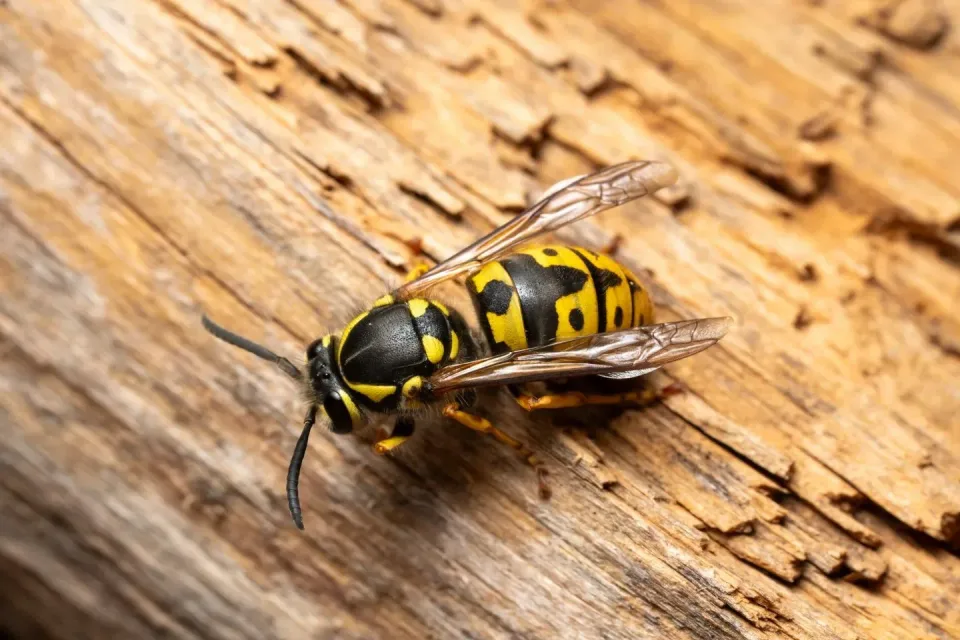
Why Wait Before Sealing a Yellow Jacket Wall Opening?
If yellow jackets are entering a wall opening, wait to seal it until the nest is addressed. Blocking the entrance too soon can drive insects into indoor spaces or leave an active colony inaccessible inside the wall. In calls from across the state, “Because we are getting ate up” often means people are being stung near a doorway or yard route and need to keep others clear. “I just want to nip it in the bud” is a request to stop the problem early, but the first step is confirming the flight path and nest location.
Why can sealing the wall opening backfire?
A steady stream of yellow jackets entering one hole is a clue, not an invitation to plug it. The nest may sit in a wall void, and sealing the visible entrance before treatment can leave the colony active with no route out.
In some cases, insects search for another path and emerge indoors through gaps around trim, vents, or wiring. That is the failure we want homeowners to avoid.
Freeze-thaw cycles can widen cracks in masonry, so a small-looking opening may connect to a larger concealed void. We check where insects land and disappear, then assess accessible edges rather than guessing from the exterior. Do not fill the opening with foam or caulk while traffic continues. Wait for a plan based on confirmed activity.
What should you do while yellow jackets are active?
Keep people and pets away from the flight path, and do not tap, spray, or probe the opening. A sudden disturbance can provoke defensive behavior, especially where someone must pass close to the wall. If the entrance is near a door, use another route when possible and tell the technician when activity is heaviest.
At the Beckley Exhibition Coal Mine, visitors follow marked routes; the same practical idea applies at home: keep a clear boundary around a hazard instead of approaching it. The comparison is about distance, not pest behavior.
When a wall nest is suspected, note the opening’s location and visible traffic from a safe distance. Our site inspection uses those observations to guide pest identification and treatment choices.
When is DIY no longer the right call?
A single insect outdoors with no repeated entry may only call for observation from a safe distance. Repeated flights into a wall, insects inside the home, or stings near a shared walkway are reasons to stop DIY attempts and arrange professional assessment. Spraying into a void can miss the nest and may send agitated insects toward interior rooms.
Blackwater Falls State Park is known for rugged terrain; at a home, concealed wall spaces pose a different kind of access problem because the nest may not be visible from the surface. We assess the opening and surrounding construction before choosing a method.
For more on the removal process, see Yellow Jacket Nest Removal. We also explain our inspection approach on the About Us page.
Why does a careful inspection come first?
The visible hole may not be the nest entrance, and sealing the wrong point can complicate access without stopping activity. We look for repeated flight lines, nearby gaps, and signs that insects are moving into an interior void. Huntington Museum of Art offers a familiar local landmark, but the useful lesson here is simply to observe before acting: record where insects enter and avoid disturbing that spot.
A correct identification matters because treatment needs to match the insect and the site. Do not seal the opening until activity has been addressed and the next step is clear.
Which Yellow Jacket Wall-Nest Response Fits the Situation?
The right choice depends on whether insects are actively using the wall, whether the entry is safely accessible, and whether the goal is immediate control or prevention afterward. Four distinct seasons across much of the state can affect exterior work and scheduling. Choose carefully.
| Option | Best for | Key detail |
|---|---|---|
| Professional inspection and treatment | Active wall entry | Room-by-room inspection can check for indoor activity |
| Interior crack-and-crevice treatment | Confirmed indoor or wall-void activity | Targeted placement, not broad spraying |
| Exterior perimeter treatment | Appropriate exterior prevention | Weather and product directions affect application |
| Integrated Pest Management program | Inspection, treatment, and prevention | Exclusion follows assessment of active pest activity |
Capitol Street in Charleston is part of a busy urban setting; wherever a home is located, damp basements can also support silverfish and centipedes, so an inspection should distinguish separate pest issues rather than assume one cause.
How to Prepare for a Yellow Jacket Wall Inspection
-
Schedule an assessment: Tell the technician where insects enter, how often you see them, and whether anyone has been stung.
-
Keep the opening untouched: Do not caulk, foam, drill, or spray into the wall before the nest is assessed.
-
Secure people and pets: Keep them away from the flight path and provide a safe route around the activity.
-
Share access details: Mention nearby attic or crawlspace entries so the technician can consider possible routes inside the structure.
-
Ask about the site plan: At Harpers Ferry National Historical Park, historic structures require care; likewise, tell the crew about delicate finishes or features that need protection during service.
-
Follow treatment directions: If service is recommended, follow the product-specific re-entry instructions and ask when sealing should be reconsidered.
A visit near Kanawha State Forest still begins with the same practical details: accurate observations help the crew assess the opening without unnecessary disturbance.
Who Can Help With Yellow Jackets Entering a Wall?
If yellow jackets keep entering a wall and someone has already been stung, keep clear of the opening and do not seal it while activity continues. Have the nest assessed before blocking the entrance. In higher mountain locations, cooler temperatures and longer winters can shift seasonal pest activity, so visible traffic and current conditions both matter.
Spring thaw can expose gaps and drainage problems around a home; note any newly visible openings when describing the issue. The Greenbrier in White Sulphur Springs is a recognizable state landmark, but the best treatment plan is specific to your property.
Contact WestVirginia Pest Solutions to describe the entry point and ask about Yellow Jacket Nest Removal.